[Ishigaki Island, Okinawa, Japan] Struggle with Ear Equalization? No Problem! 3 Stress-Free Dive Sites Picked by a Former Instructor
"I love diving, but ear equalization is always my biggest worry…"
"What if I can't equalize and hold everyone else up?"
More divers than you'd think hesitate to book because of this exact anxiety. But from a former professional's perspective, Ishigaki Island, Okinawa, Japan — the gateway to the Yaeyama Islands — is nothing short of "the most equalization-friendly ocean you'll find."
Going beyond the generic "beginner-friendly" label you see in guidebooks, I've handpicked 3 dive sites where you can truly relax from the bottom of your heart and reduce equalization pressure to absolute zero. This is world-class diving that's genuinely off the beaten path — authentic tropical Japan far from Tokyo and Kyoto.
1. 3 Reasons Ishigaki's Ocean is Perfect for Equalization-Anxious Divers
Diving around Ishigaki Island has distinct advantages over other areas (like cave-heavy Miyako Island, for example).
- Everything happens at relatively shallow depths: The main coral formations and marine life are concentrated at depths of just 3–18 meters.
- Gentle currents: The "beginner-friendly sites" that guides choose are often as calm as a swimming pool — no need to rush.
- Few "vertical drops": There are very few sites requiring rapid descents. Most feature gentle slopes or consistent depths.
- Plenty of beginners and returning divers: Ishigaki is everyone's dream diving destination. While advanced divers flock here too, many visitors are beginners or divers returning after a long break — so guides frequently choose easy yet spectacular sites.
In other words: "Even if you stay shallow waiting for your ears to equalize, you're surrounded by stunning scenery the entire time. You can follow along at your own pace. And you're far from alone." That's the greatest charm of diving Ishigaki.
2. A Former Pro's Top 3 "Zero Equalization Pressure" Dive Sites
From the sites that city-center dive shops use daily, I've selected places where you can dive with confidence — even on your very first dive of the trip.
Located on the south side of the Sakieda Peninsula, this is one of Ishigaki's most reliable go-to sites.
✅ Why It's Stress-Free
The entry point is only about 5 meters deep. The shallow area is expansive, so you can fully enjoy the dive without going deep at all. The bottom is mostly rock and sand, so even if you're not confident with buoyancy control, you can settle on the bottom and take your time.
🐟 Highlights
The #1 sea turtle encounter rate around Ishigaki! You'll also find cuttlefish spawning, garden eels poking out of the sand, and a whole lineup of soothing marine life.
"I just want to see incredible coral at the shallowest possible depth" — then this is your spot.
✅ Why It's Stress-Free
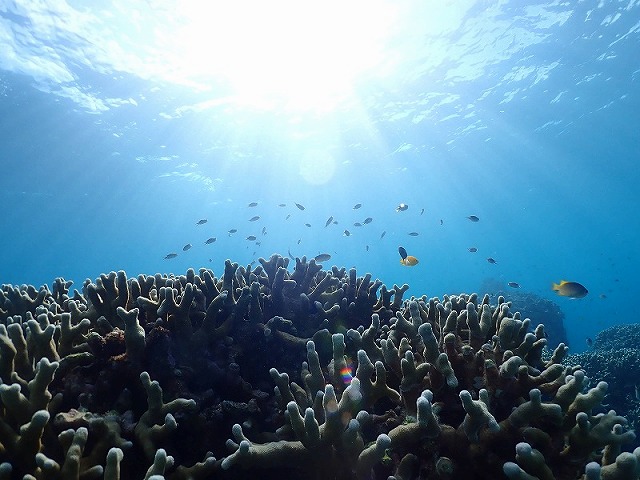
Magnificent branching coral stretches endlessly at just 3–5 meters deep. There are no sudden "drop-offs" (underwater cliffs) — just gentle slopes, so if your ears feel uncomfortable, you can immediately return to shallower water.
🐟 Highlights
Deep in the bay sits a "Guinness-class giant Porites coral" — an absolute must-see. Close to the surface, shimmering sunlight dances through schools of blue-green chromis weaving through the coral forest. It's utterly mesmerizing.
Some call it "Kuroshima Therapy" — a truly healing dive site.
✅ Why It's Stress-Free
Maximum depth is only about 8 meters. Visibility is exceptional — you can see the bottom from the boat, it's that bright. The reassurance of "being able to see below" dramatically reduces tension — equalization's worst enemy.
🐟 Highlights
Fish schooling around coral heads (bommies) scattered across pristine white sand. If you're lucky, you might spot a ribbon eel. Just next door, the "Big Corner" off Aragusuku Island (Panari) is a shallow manta ray point — part of the world-famous Yaeyama manta migration route.


3. 💡 Former Instructor's Advice: Equalization is About "Mindset" and "Preparation"
When I was working as an instructor, the common thread among divers who struggled with equalization wasn't just technique — it was tension.
The thought "If I can't equalize, I'll inconvenience everyone" causes your neck muscles to tighten, making it even harder for the Eustachian tubes to open. That's precisely why choosing a site where the guide says "Take your time right here, just follow along at your own pace" matters more than anything.
Also, a local insider tip: water temperatures around Ishigaki stay above 20°C (68°F) even in winter. Some visiting instructors from mainland shops and winter guests wear drysuits, but a thick wetsuit with a hooded vest is generally all you need.
Trying to power through on the boat is often too late. Start preparing the day before.
- Physical Condition: Sleep deprivation and hangovers are equalization's worst enemies. Go easy on alcohol the night before and get plenty of sleep.
- Chew Gum: Chewing gum on the way to the port or on the boat loosens your jaw and helps open the Eustachian tubes.
- Otovent: The "Otovent" — a balloon you inflate through your nose — is an extremely effective training device. If you're anxious, consider buying one in advance and practicing at home.
[From a Former Instructor Who Struggled with Equalization] The Techniques That Let Me Dive Despite Narrow Eustachian Tubes
For those afraid to dive because of equalization. A former pro's "magic earplugs," day-before prep, and descent tricks — thoroughly explained.
ENT Clinic Guide for Divers on Ishigaki Island — From Congestion to Emergencies
Pre-dive congestion or ear trouble? A local's guide to choosing between "Tomiyama" (local favorite), "Nansei" (speed-focused), and the prefectural hospital (emergencies).
4. The "Magic Phrase" to Tell Your Dive Shop When Booking
If equalization makes you anxious, write this in the notes section when you book:
No guide will be annoyed by this. In fact, when you communicate in advance, they can plan ahead and prepare extra-attentive care for you. It also minimizes impact on the tour schedule — they'll actually thank you for telling them.
Take that brave first step, and waiting for you is a world of blue so breathtaking you'll forget equalization was ever a worry!

