[Ishigaki Island, Okinawa, Japan] Ear Equalization Tips from a Former Instructor Who Struggled with It — Proven Techniques & the Magic Earplug
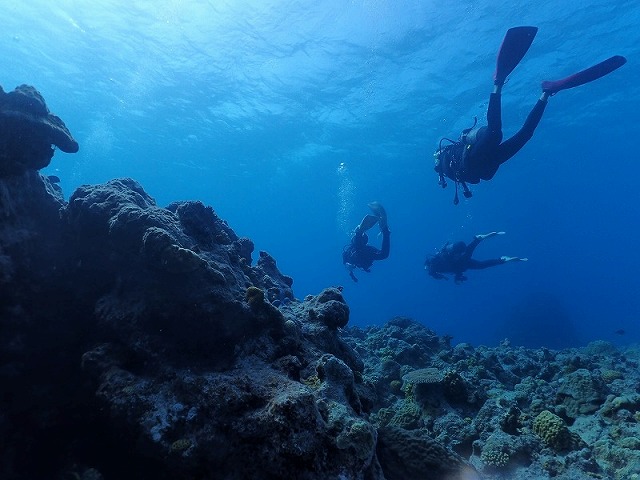
"I can't equalize properly and I'm scared to descend."
"The panic from not being able to equalize makes everything worse."
I understand that feeling — painfully well. The truth is, I became a professional diving instructor despite being terrible at ear equalization — a potentially fatal weakness for a diver. Born with narrow Eustachian tubes, during my fun-diving days I often couldn't equalize, and there were days I could only hover at 2–3 meters, watching my buddies' bubbles from above.
But precisely because I was an "equalization weakling," I've researched the struggles and solutions more thoroughly than anyone who equalizes effortlessly. As a former instructor who fought this battle daily in the world-class diving waters of the Yaeyama Islands, here are the techniques and items that actually worked — your insider guide to diving on Ishigaki Island, Okinawa, Japan.
- 1. The Night Before — Equalization Starts Before You Even Get Wet
- 2. The Magic Item — Doc's ProPlug Diving Earplugs
- 3. Morning of the Dive — Maximize Nasal Flexibility
- 4. Starting Your Descent — Relax, Don't Rush
- 5. Surface Interval — How You Rest Determines Your Next Dive
- 6. 💡 When It Just Won't Work…
- Summary: Equalization is "Preparation & Relaxation," Not Just a Skill
1. The Night Before — Equalization Starts Before You Even Get Wet
For those who struggle with equalization, physical conditioning is make-or-break. Even slight swelling of the nasal mucosa can easily block the Eustachian tubes.
- "Cold" is Your Worst Enemy: Summer on Ishigaki Island — it's tempting to blast the AC while sleeping, but cold air directly causes nasal congestion. The golden rule: don't chill your neck, and avoid direct airflow while sleeping.
- Go Easy on Alcohol and Late Nights: Alcohol causes mucosal congestion. If you're an equalization weakling, limit yourself to one Orion beer the night before.
- Relaxation Stretches: When muscles are tense, the tissues around your ears stiffen too. Loosening your neck and shoulders before bed is especially important.
2. The Magic Item — Doc's ProPlug Diving Earplugs
I honestly cannot recommend this enough. If you struggle with equalization, please get these.
When I bought these at a dive shop, the staff said skeptically, "Do these actually work?" — which makes sense, because people who struggle with equalization don't usually become dive professionals. But for me, the effect was dramatic.
- What Are Diving Earplugs?: Specialized earplugs with a tiny hole. They slow down the rate of pressure change reaching your ears.
- How They Help: The sudden pressure squeeze disappears, giving your body time to catch up with pressure changes. They also keep the inside of your ears warm, preventing the muscles from stiffening in cold water. These combined effects make equalization noticeably easier while wearing them.
▼ The item that changed my diving career ▼
3. Morning of the Dive — Maximize Nasal Flexibility
Three things to do on the morning of your dive, before boarding the boat.
- Warm Your Nose: Use a warm shower or a microwaved damp towel to warm your nose. This softens nasal mucus, making it easier to drain, and dramatically improves airflow. It also eases tension.
- Chew Some Firm Gum: Mint flavor recommended. It loosens your jaw muscles and clears your nasal passages. Just don't overdo it to the point of jaw fatigue.
- Harness the Placebo Effect: While soaking up the morning sun, say out loud: "I can't wait for today's dive!" Tension is the arch-enemy of equalization. Switching your brain to "calm mode" is a legitimate skill.
4. Starting Your Descent — Relax, Don't Rush
When it's time to descend, avoid plunging straight down. (Unless instructed otherwise for drift diving, etc.)
Take the First Meter Slowly and Carefully
The greatest pressure change occurs near the surface. Don't let the momentum of your giant stride or back roll entry carry you down. Instead, fully inflate your BCD on the boat, and after entry, slowly release air while descending "gently, gradually." It also helps to tell your guide "I need extra time, can I enter first?" so you can go at your own pace.
Tilt the Stubborn Ear Toward the Surface During Valsalva
This is a trick that surprisingly few people know. When performing the Valsalva maneuver (pinching your nose and gently blowing), tilt the ear that won't equalize upward — toward the surface. It's remarkably effective. Tilting your head physically opens the Eustachian tube wider, and you may be amazed at how easily it clears.
5. Surface Interval — How You Rest Determines Your Next Dive
You made it through dive one! Congratulations. Let's keep the momentum for dive two. But first:
- Warm Your Face and Neck: After diving, your head and neck are colder than you realize. If warm water showers are available, let the water run over your face to loosen muscles that have stiffened from the cold.
- Stay Hydrated: Dehydration worsens mucosal conditions. Drink water frequently. And use the restroom too.
6. 💡 When It Just Won't Work…
It's frustrating. It hurts. You've paid good money and traveled all the way to Ishigaki Island and "of all days, it has to be today…" I get it. But:
"When it won't equalize, it won't equalize. That's just how it is. Sometimes stepping back is the way forward."
Forcing a descent through pain means you won't enjoy the coral or the fish anyway — just fear. If dive one doesn't work out, how about sunbathing on the boat or snorkeling at the surface? It's honestly not bad at all. Most shops won't charge for unused tanks.
No reputable dive shop will force you to descend. "Choosing not to dive right now is the decision that makes today the most enjoyable" — a diver who can make that calm judgment is, in my eyes, the most professional and coolest diver there is. The courage to pull back is harder than the courage to push forward.
Summary: Equalization is "Preparation & Relaxation," Not Just a Skill
I went from being terrible at equalization to becoming a diving instructor — by listening to my body and being meticulous about preparation.
Put in your Doc's ProPlugs, warm your nose, tilt the stubborn ear upward. Just these steps will dramatically improve your diving experience. I sincerely hope you can enjoy the blue waters of Ishigaki Island — a tropical escape for world-class diving — without ear pain getting in the way!


Related Articles
[Ishigaki Diving] Scared of Equalization? A Former Instructor's Top 3 "Stress-Free" Dive Sites
"I'm anxious about equalization…" — Shallow, calm spots like Osaki and Nagura Bay where you can descend at your own pace, plus the magic words to say when booking.
Ishigaki Island ENT Clinic Guide for Divers — Congestion Info, Wait Times & Emergency Options
Pre-dive nasal congestion or ear trouble? A local's guide to the go-to "Tomiyama" clinic, speed-focused "Nansei," and the prefectural hospital for emergencies.

